A mention doesn't tell you if you're winning AI search. Share of voice does.
Most generative engine optimisation (GEO) tools stop at the mention count. They confirm that you were named, and little else. Cleotic was built to measure the next step. Cleotic is an AI brand visibility tracker that reports your share of voice across ChatGPT, Perplexity, Gemini, Claude, and Grok, so you can see your position against named competitors rather than your own activity in isolation.

Anton Pletnov
Director of Growth and Operations

Share of voice in AI search is the percentage of brand mentions you hold in AI answers, measured against every competitor named for the same set of buyer questions. A raw mention count confirms only that you appeared. Share of voice tells you whether you appeared more often than your rivals, which is the signal that maps to winning or losing.
This matters now because AI answers have become a buying surface in their own right. 45% of B2B buyers used AI tools during a recent purchase (Gartner, 2026). When a buyer asks ChatGPT or Perplexity to recommend providers in your category, the engine returns a short list of names, not a page of links. You are on that list often, sometimes, or never. A mention count on its own cannot tell those three states apart. Share of voice can. As of May 2026, it is the clearest measure of how you stand in AI results.
Most generative engine optimisation (GEO) tools stop at the mention count. They confirm that you were named, and little else. Cleotic was built to measure the next step. Cleotic is an AI brand visibility tracker that reports your share of voice across ChatGPT, Perplexity, Gemini, Claude, and Grok, so you can see your position against named competitors rather than your own activity in isolation.
Why isn't counting AI mentions enough?
Counting AI mentions is not enough because a mention count has no denominator. It rises when AI answers get longer and falls when they get shorter, with nothing to compare it against. Two brands can both gain mentions in the same month while one quietly loses ground to the other. Only share of voice shows that shift.
A mention count is a vanity metric for the same reason a follower count is. It moves, it feels like progress, and it hides the thing that matters. Your competitors are being named in the same answers, for the same buyer questions, and their mentions are climbing too.
Picture two brands in the same category. In April, you are named in 40 AI answers. In May, you are named in 60. A mention count calls that a strong month. But if your closest competitor went from 40 to 120 over the same period, you did not gain ground. You lost half your relative position while your dashboard showed green.
This is why a rising mention count can be the most comforting wrong number in your reporting. It tells you whether you were mentioned, when the real question is whether you were mentioned more often than the brands a buyer is choosing between.
Mentions also say nothing about position. Being named last in a list of eight, after a paragraph of hedging, is counted the same as being the first and most confident recommendation. To a buyer, those two outcomes are not close. To a mention count, they are identical.
The cost is a slow one. A competitor can climb past you in AI answers over a quarter while your mention count drifts gently upward. Nothing in a presence-only tool will flag it, because nothing in a presence-only tool is watching the gap.
See your share of voice against named competitors across every major AI engine. Run a free Cleotic.AI brand audit.
How do you measure share of voice in AI search?
To measure share of voice in AI search, you run a fixed set of buyer-intent prompts through each AI engine, record every brand named in every answer, and calculate your mentions as a percentage of all brand mentions. Repeat the same prompts on a schedule and that percentage becomes a trend.
Start with the prompts, not the brand. Share of voice only means something when it is measured against the questions your buyers actually ask. A list of generic category terms will not do it. You need the real prompts a buyer types. The comparison questions, the recommendation questions, and the problem-led questions that end with the engine naming a provider.
Then capture every brand in every answer, not just your own. The denominator is the whole point. If you only log your own mentions, you have rebuilt the vanity metric with extra steps. Share of voice needs the full set of names the engine returned, yours and every competitor's.
Hold the prompt set steady over time. If the prompts change from week to week, the score is measuring your prompts, not your visibility. A fixed prompt set, run on the same schedule, is what turns a single reading into a trend you can trust.
Measure each engine on its own. ChatGPT, Perplexity, Gemini, Claude, and Grok each draw on different sources and name different brands. A share of voice number averaged across all five can hide the one engine where you are absent.
Done by hand, this is slow and repetitive. It is also exactly what Cleotic automates. Cleotic runs your prompt set across all five engines on a weekly schedule, records every brand named, and reports your share of voice as a tracked number with the verbatim answers behind it. The measurement is continuous, so a drop reaches you in days, not at the next quarterly review.
How is share of voice different from what generic GEO tools show?
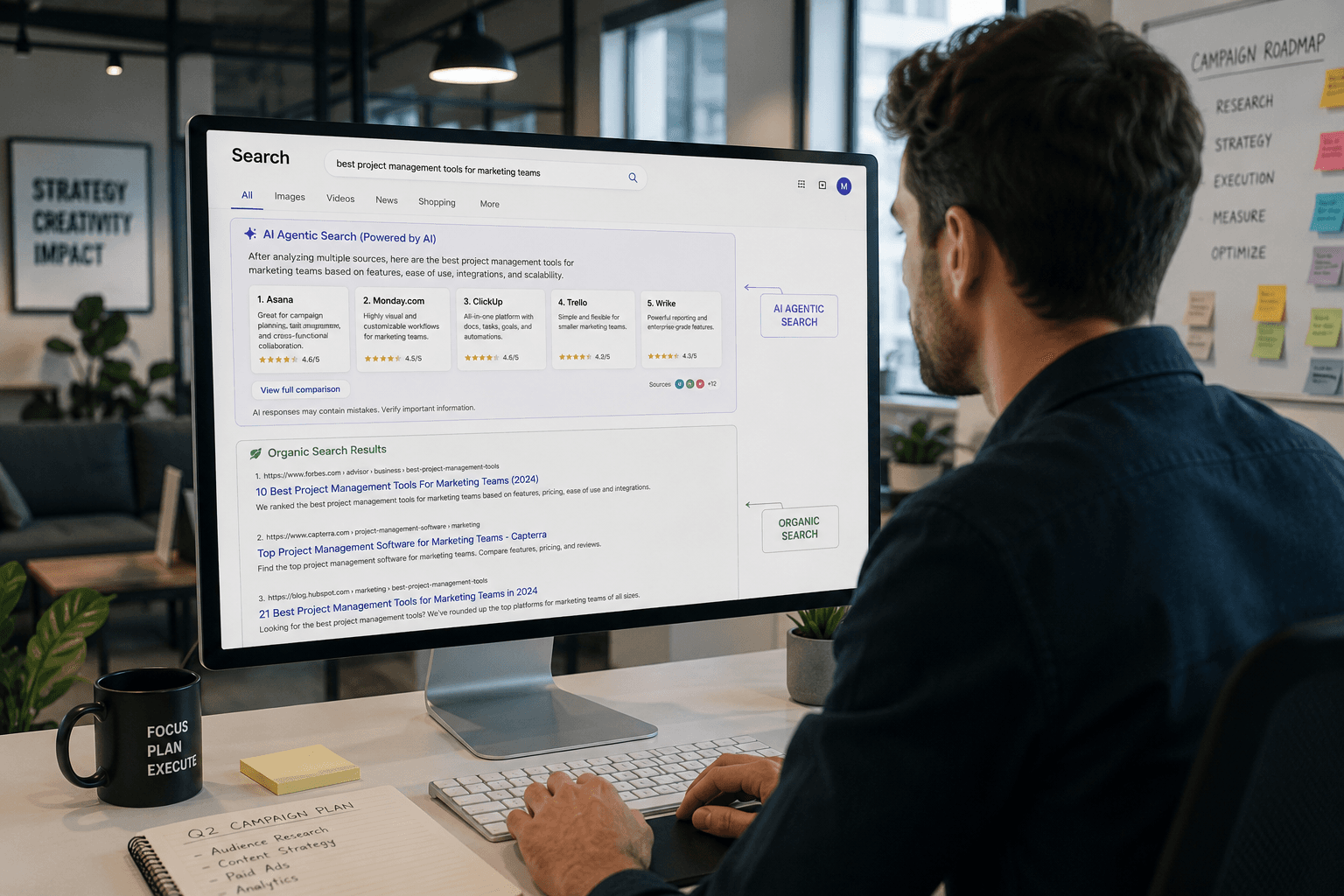
Generic GEO tools mostly report presence. They confirm that your brand was mentioned and often show a raw count or a single visibility score. Share of voice reports position. It shows your mentions as a percentage of all brand mentions in your category, which is what tells you whether you are gaining or losing ground.
What you see | Generic GEO tracker | Share of voice in Cleotic |
The core number | A mention count or a single visibility score | Your mentions as a percentage of all brand mentions in your category |
A competitor pulling ahead | Invisible, unless you check their profile separately | Visible at once, as your percentage falls |
What a change means | You were mentioned more, or less | You gained or lost ground against named rivals |
The question it answers | Whether you were mentioned | Whether you are winning the category |
What you can act on | Little, the number has no context | A clear gap to close, prompt by prompt and engine by engine |
The difference is not cosmetic. A presence-only tool can show you a healthy green number for months while your share of voice erodes underneath it. The mention count and the share of voice can move in opposite directions at the same time, and only one of them is telling you the truth about your position.
Cleotic is built around share of voice because it is the metric that maps to a commercial outcome. A higher share of voice means AI engines recommend you, ahead of competitors, to buyers who are ready to choose. That is the result worth reporting. A mention count is, at best, a loose proxy for it.
Where to start
Measuring share of voice properly is a measurement task, not a guess. Start with these four steps.
List the 20 to 30 buyer questions that lead to a recommendation in your category, in the words a real buyer would use.
Run each question through ChatGPT, Perplexity, Gemini, Claude, and Grok, and record every brand named in every answer.
Calculate your mentions as a percentage of all brand mentions, per engine, so no weak engine hides inside an average.
Move to continuous tracking once you have a baseline, so a fall in share of voice reaches you before it reaches your next board report.
A mention count tells you that AI noticed your brand. It does not tell you whether AI is recommending you or the competitor sitting next to you in the same answer. Share of voice does, and as AI answers take a larger part in how buyers choose, that is the number worth reporting.
You do not have to assemble it by hand. Cleotic tracks your share of voice across ChatGPT, Perplexity, Gemini, Claude, and Grok, against the competitors named alongside you, and updates it every week. Run a free Cleotic.AI brand audit to see your share of voice today, or start a free 14-day trial and watch it move week to week.