What GEO is and why it's replaced SEO as the brand battleground
What does AI say abut your brand and why it matters? If you have not asked this question yet its worth paying attention now.

Anton Pletnov
Director of Growth and Operations
What GEO is and why it's replaced SEO as the brand battleground
A few years ago, the question every marketing leader asked was: "Where do we rank on Google?"
Today, that question is rapidly becoming the wrong one. A growing share of your potential customers aren't clicking search results at all. They're asking an AI. And the AI is answering without ever sending them to your website.
That shift has created an entirely new battleground for brand visibility, and most companies don't even know they're losing ground on it.
The search bar just got a lot more complicated
Cast your mind back to how a B2B buyer researched their options two years ago. They'd type something into Google, scan the first page of results, visit a few websites, maybe download a guide or two. Your SEO strategy existed to put you in front of them at that moment.
Now, an increasing number of those same buyers open ChatGPT, Claude, Gemini, or Perplexity instead. They ask a question in plain English — "what's the best tool for tracking brand mentions across AI platforms?" — and they get a synthesised answer back. No list of ten blue links. No decision paralysis. Just an answer.
The problem? That answer comes from somewhere. The AI has formed a view of your category, your competitors, and your brand, based on everything it has absorbed. And you had zero input into what it learned.
This is where Generative Engine Optimisation (GEO) comes in.
What GEO actually means
GEO, short for Generative Engine Optimisation, is the practice of understanding and influencing how AI engines represent your brand, your products, and your category.
Think of it as the answer to a question that didn't exist three years ago: "What does AI think about us?"
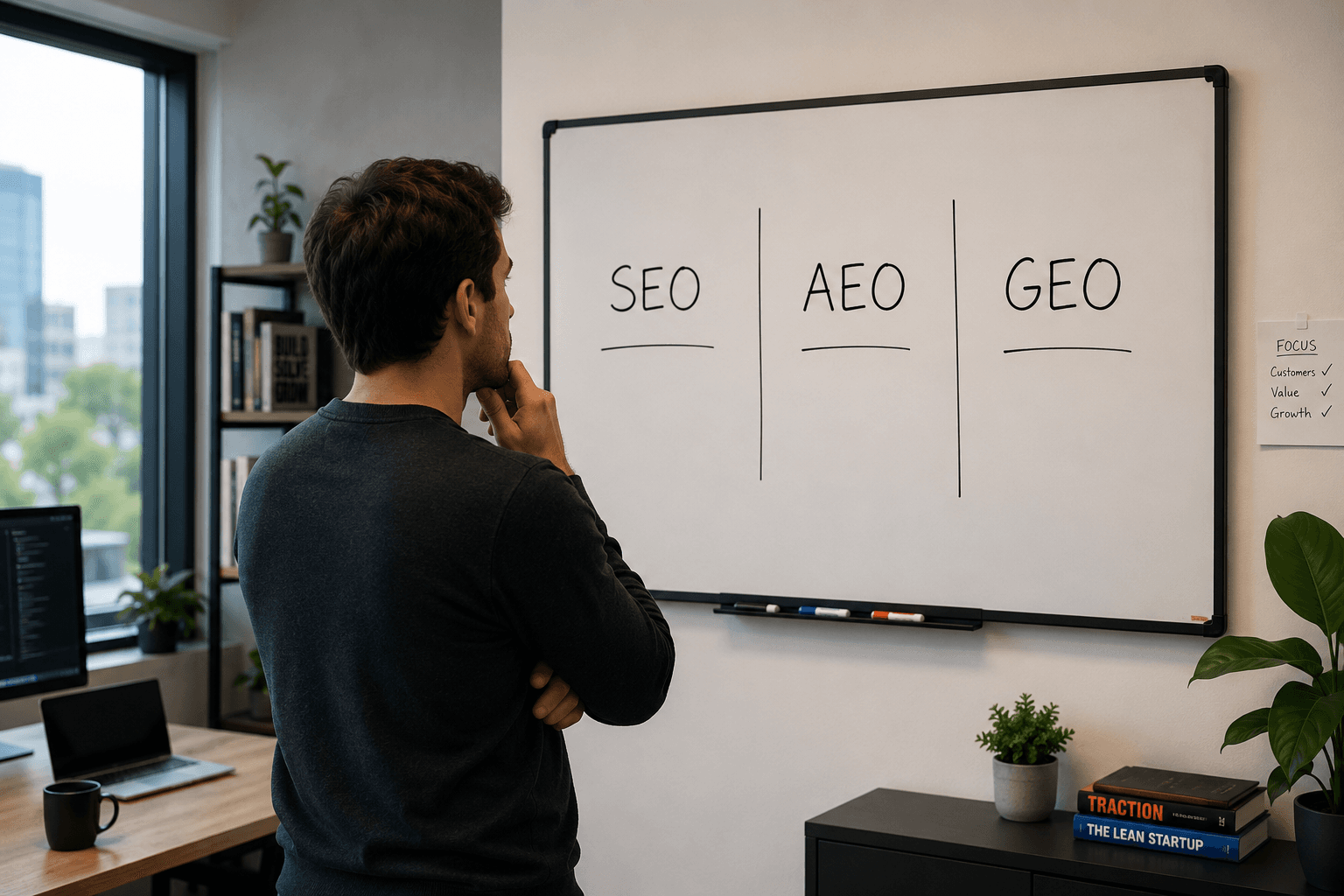
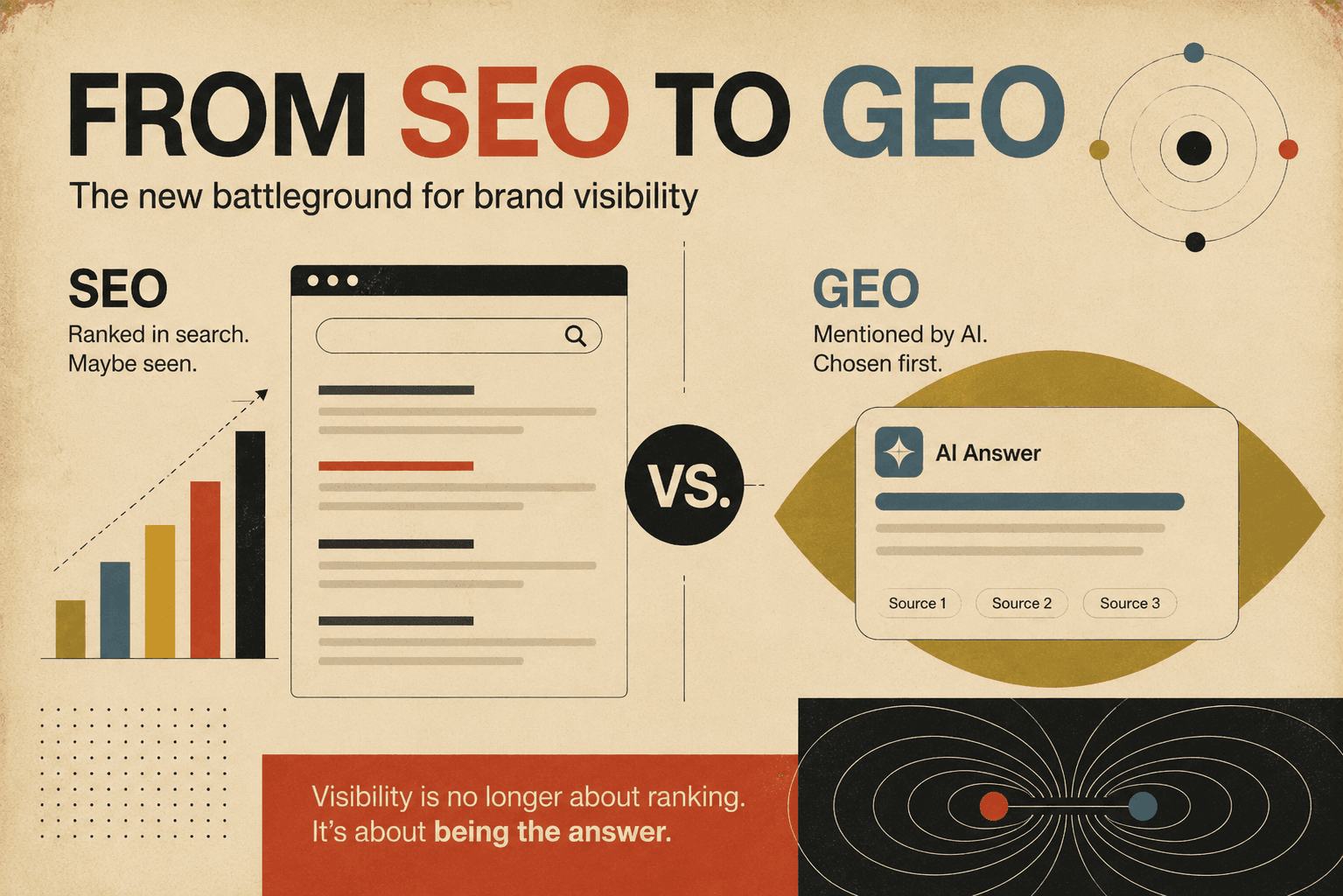
Traditional SEO was about rank. GEO is about narrative. It's about whether you show up when an AI answers a question relevant to your business, how accurately you're described, what sentiment surrounds your brand, and whether your competitors are getting the credit that should be yours.
The stakes are real. When a prospective customer asks an AI which platforms are worth considering in your space, being absent from that answer is the equivalent of being on page three of Google. Except there is no page three. There's just the answer, and then everything else.
Why this matters more than most marketing teams realise
Here's the part that tends to get people's attention.
AI engines aren't neutral. They reflect the information they were trained on, which means brands that have a strong, consistent, well-documented presence in high-quality sources tend to show up more favourably. Brands that don't, or that have inconsistent messaging scattered across the web, often find themselves misrepresented, underrepresented, or missing entirely.
There's also the sentiment dimension. It's not just whether you're mentioned. It's how you're described. "Brand X is a solid option for mid-market teams" lands very differently to "Brand X has had mixed reviews around customer support." Both might appear in an AI answer. You need to know which one is being served.
And unlike traditional search, you can't just audit your GEO standing with a quick Google of your own name. AI engines give different answers to different users, in different contexts, on different days. The landscape is dynamic. Without structured tracking, you're essentially flying blind.
The gap between knowing this and doing something about it
Understanding that GEO matters is the easy part. Acting on it is where most teams get stuck.
The information is fragmented. AI engines don't publish data about how they represent brands. There's no equivalent of Google Search Console telling you how often you appeared in AI answers this month, in what context, and alongside which competitors. To get that picture manually, you'd need someone spending hours every week prompting multiple AI platforms, recording answers, tracking changes over time, and trying to make sense of it all.
That's not a strategy. That's a very expensive guessing game.
This is precisely the gap that Cleotic was built to close.
Making GEO intelligence actionable
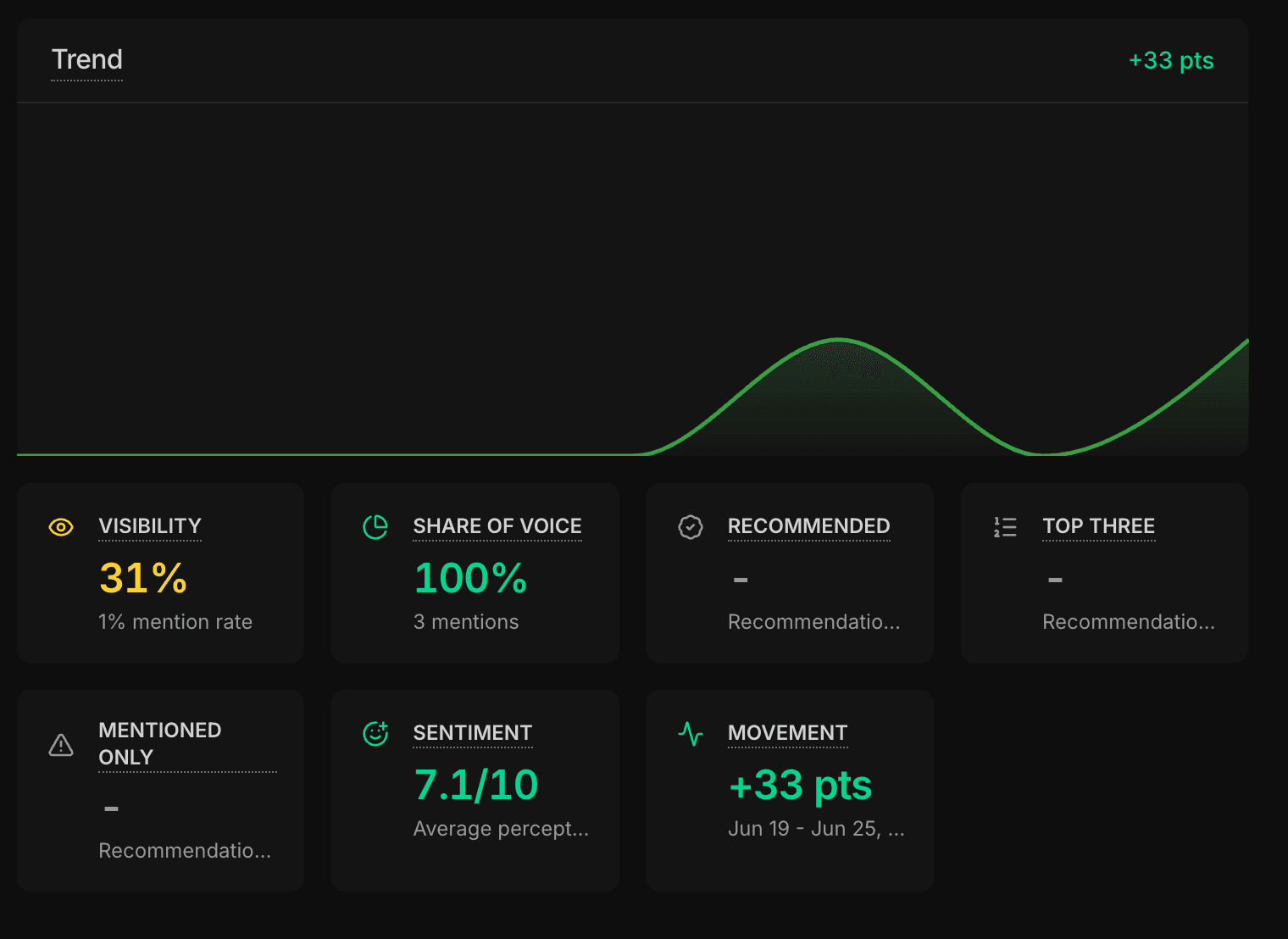
Cleotic is an AI brand visibility tracker that monitors what the major AI engines are saying about your brand, continuously, across platforms, and in context.
It's not about vanity metrics or abstract scores. It's about giving marketing and brand teams the specific intelligence they need to act. Which AI platforms are mentioning you? What language are they using? Where are competitors pulling ahead in AI-generated narratives? Which parts of your positioning are landing, and which are being ignored or distorted?
That kind of intelligence doesn't just tell you where you stand. It tells you what to do about it. Whether that's adjusting your content strategy, addressing gaps in your public presence, strengthening your thought leadership in specific areas, or correcting narratives that have formed without your input.
GEO without data is guesswork. Cleotic makes it a discipline.
The category shift is already happening
It's worth being direct about the timeline here. This isn't a trend to watch. It's a shift that's already underway.
AI-assisted search is growing fast across every market. The brands that treat GEO as a strategic priority now, putting in place the tools and processes to monitor, measure, and respond, will have a meaningful head start over those who wait until the problem becomes impossible to ignore.
The companies that dominated SEO in 2010 didn't get there by accident. They invested early in understanding how the game worked, then played it consistently. GEO is that same inflection point.
What to do with this info?
If you're a marketing or brand leader and you haven't yet asked the question "what does AI say about us?" — now is a good time to start.
The answer might be reassuring. It might be surprising. It will almost certainly be informative. And knowing it is infinitely better than not knowing it.
Cleotic makes that question easy to answer, and keeps answering it every day, so you're never caught off guard.
Find out what AI is saying about your brand. Explore Cleotic.ai